What would be English teaching without great textbooks to guide you and your students through? Here is my first review and it is a book I have used in 3 different settings; a
juku, my English school in
Nishinomiya http://www.fesjapan.com/ , and at the high school where I work during the very few
ESS(English
Speaking Society) meetings.
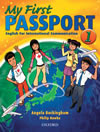
First a brief intro of the book. The book follows the adventures of Japanese students on a
home stay, a school trip, and Japanese students who have English-speaking students do a student exchange at their school. A very nice variety of situations. For more information please visit the oxford site ...
http://www.oupjapan.co.jp/. There is also a workbook to use with the series.
The basic layout of the book is quite easy to understand. It starts with an introduction of the characters that will appear in the book. I can often turn these 2 pages into a lesson by reading the passage to the students, asking them read it, and after I check their understanding(I ask them if they have any questions) I ask them questions about the paragraph for Q and A practice as a double check of comprehension.
The next section is a "Where are you from" which takes some information from the introduction and asks where they are from. There are a few more questions for students and this lesson has a workbook page for review. I find this is a good tie-in to the introduction for the 2nd lesson as usually the 1st unit in the book is very easy and takes little time.
Now we get the to the meat of the book which are the lessons itself. They all start with a picture speculation (always good) to get the students thinking of the situation. Then the first listening which is nothing more than checking whether the words from the word list are spoken on the CD. I found for low-level adult students I would skip this part and just have them repeat the words as I do with everyone. The next is the listening section part 2 which can be anything from multiple choice, True/False, or open-ended questions(which I prefer). For higher students I often ask them more information, especially for the T/F which can be quite easy. After all, the students have a 50/50 chance even if they have no idea what was said. Both these parts use the same conversation so for low students, they have 2 chances to hear the conversations.
The next part of the lesson is the key words and phrases section which I really appreciate, as I do in any book. It shows the students exactly what language is used and what they will use themselves later in the lesson.
Next is the conversation which has 2 parts. The first part is a listening where students must fill in the blanks, and after that is complete the book has 2-3 new substitution words which can be used to make a new conversation but based on the model, i.e. "I am going to the bank." but the new conversation might change bank to shopping mall.
The last part of the lesson is the activity which is an information gap between students. Each student A and B have different pages with different information. The workbook usually reinforces the vocab and structures used which can be used at the end of class if there is time, or done as homework.
And that concludes each individual unit. Every 3 units there is a review which I often skip unless the students really struggled with the lessons. Also at the end of the book are culture files which explain a culture difference between the West and Japan which were great for ESS meetings. They correspond to the topics of each unit. For Adult students I do not use or let them read for homework. And at the very end of the book there is a English word list that has Japanese which is great for lower students although I admit I try not to use it if possible.
So that is the book format. Let me give a summary of the good and bad points.
Good points.
- It is colorful. Easy to understand pictures.
- Well-rounded. Listening practice, vocab, structured conversation, free talk.
- Easy to understand structure makes it ideal for lower students.
- Very reasonable price for the textbook, workbook, and classroom CD.
- A lot of useful situations: introductions, shopping, sightseeing tours, etc.
- Related to Japan and Japanese learners.
- Almost no preparation time is required. Good for busy teachers.
- More resources are available on the web such as tests and more review.
Bad Points:
- The Conversation listening practice where students fill in the blanks is often too long so students can listen and understand, but do not have enough time to write so they forget the answer.
- The difficulty of the lessons often varies considerably but this due in part that they chose useful situations so this point is forgivable to a degree.
- No Japanese instructions, also a minor point.
I hope to review other books in the passport series at a later date including the new my first passport 2. I will start to use this book in the coming weeks.
Overall rating for this book: 8/10 I highly recommend for beginners and young learners.
Labels: ELT Book Review, Passport series


